
The Limitless Journal
Find the right starting point—and a path back to what matters.
These articles turn current research and clinical reasoning into practical decisions. Learn what may be influencing your symptoms, what a one-on-one evaluation can test, and how rehabilitation can be built around the activity you want back.
Research guides the plan. Your examination and response to treatment determine how that plan is applied.
Featured
Three places to start.
Start with running, dry needling, or strength-sport rehabilitation.

Running
Why Does My Knee Hurt When I Run? A Runner’s Guide to Patellofemoral Pain
Front-of-knee pain is common in runners, but the useful plan is individualized. Learn how symptoms, strength, training load, and running mechanics guide treatment and return to mileage.
Read the article
Dry Needling
Dry Needling vs. Acupuncture: Why the Evaluation Changes the Treatment
Both use thin filiform needles. At Limitless, dry needling begins with the movement that hurts, treats a relevant target, and checks the same movement again before rehabilitation continues.
Read the article
Barbell, Powerlifting & CrossFit
Why Do My Squat, Deadlift, or Press Hurt? A Barbell Athlete’s Guide to Training Through Pain
Use a same-session audit to adjust load, range, volume, fatigue, or exercise selection while rebuilding a painful squat, deadlift, or press.
Read the articleBrowse by focus
Go directly to what you care about.
Articles can appear in more than one area because real symptoms rarely stay inside one neat label.
Focus 01
Running
Knee, Achilles, and shin pain explained through tissue capacity, training load, running mechanics, and a criteria-based return to miles.
Runner’s knee: what to assess before changing your stride
Front-of-knee pain is common in runners, but the useful plan is individualized. Learn how symptoms, strength, training load, and running mechanics guide treatment and return to mileage.
Read the article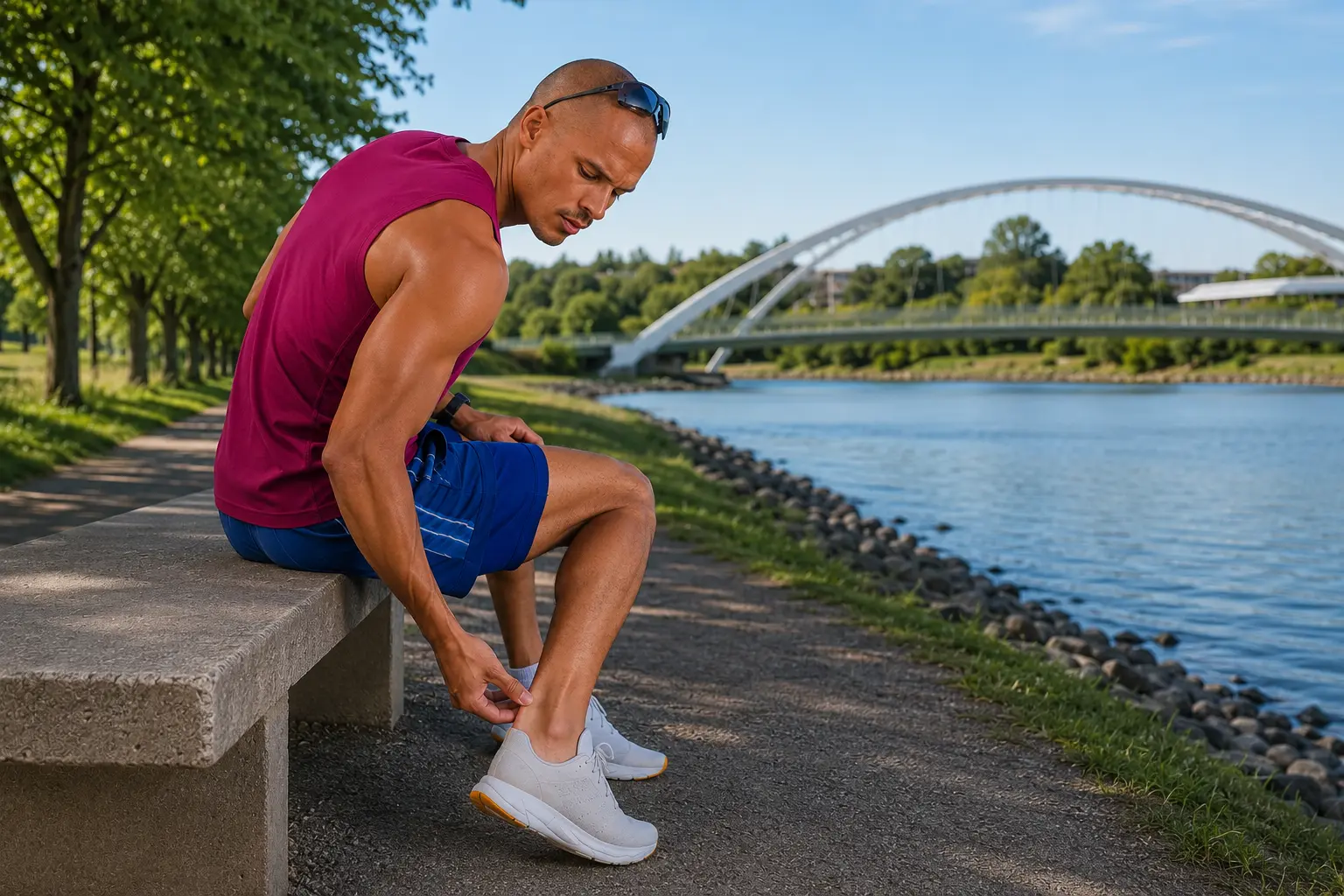
Achilles pain: rebuild the tendon for running
Achilles pain rarely improves through rest or stretching alone. Learn how tendon loading, calf strength, symptom response, and running demands shape a progressive return.
Read the article
Shin pain: when to modify—and when to stop running
Not every painful shin is the same. Learn how symptom location, tenderness, training changes, and recovery help separate medial tibial stress syndrome from a possible bone stress injury.
Read the articleFocus 02
Golf
Back, shoulder, elbow, and wrist guidance built around the swing, practice load, and a confident return to play.

Golf back pain and the body–swing connection
Back pain does not have to end your season. Learn how the back, hips, upper spine, feet, swing timing, and practice load can be assessed and trained together.
Read the article
Golf elbow and wrist pain: grip, impact, and load
Elbow or wrist pain does not automatically require a long layoff. A precise exam can separate grip, impact, local tissue capacity, and whole-swing contributors.
Read the article
Golf shoulder pain through the backswing and finish
A painful shoulder does not automatically mean the swing is damaging it. Learn how motion, strength, lead and trail roles, fatigue, and swing demands shape the return.
Read the articleFocus 03
Hypermobility
Understand recurring pain, muscle guarding, fatigue, and how to build strength without treating your body as fragile.
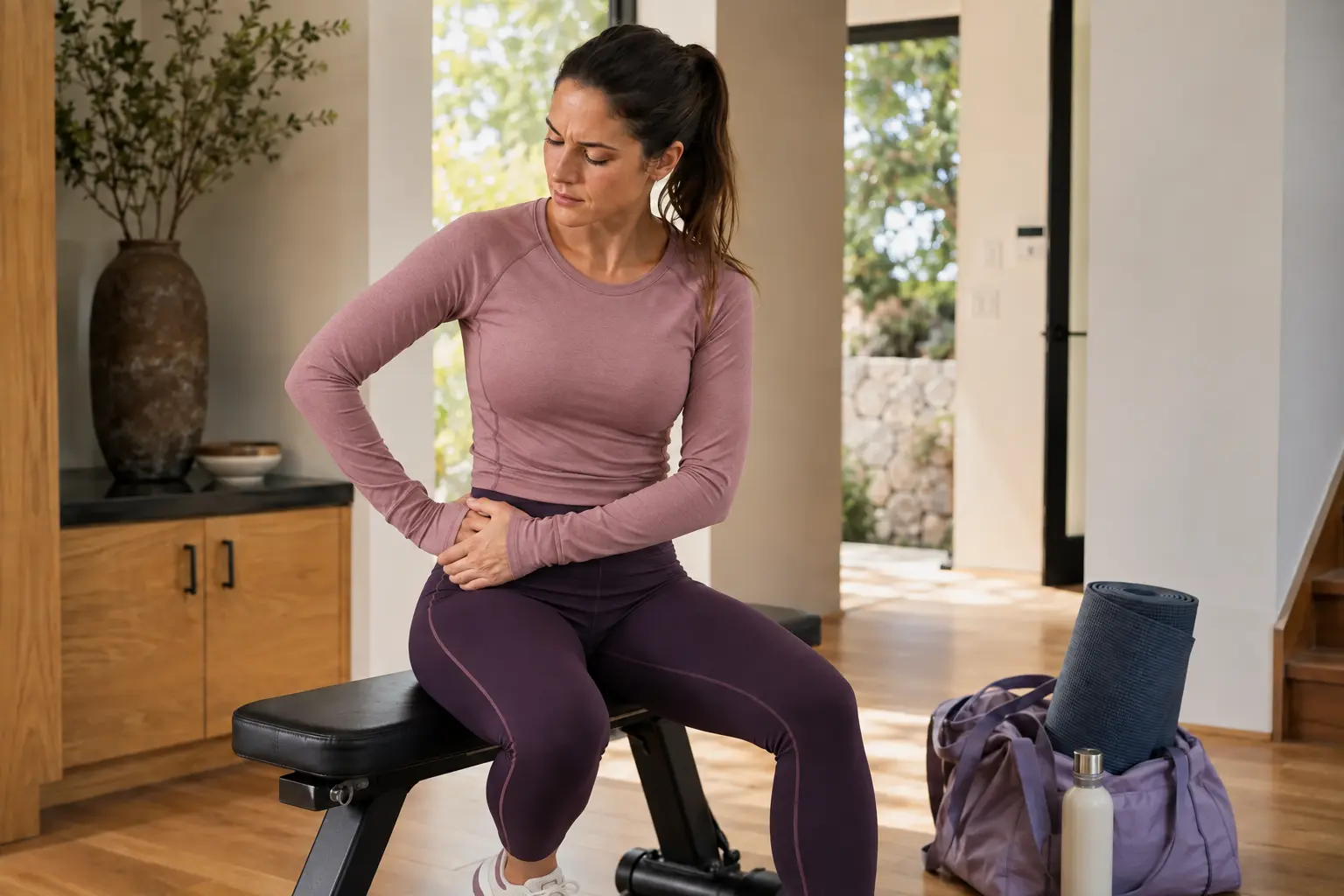
Hypermobility pain beyond flexibility
Learn why hypermobile joints may hurt, how HSD differs from hEDS, why muscles can feel tight, and how to test one practical change without guessing.
Read the article
Dry needling and hypermobility pain
Dry needling may address a reproducible muscle-related symptom, but it does not tighten ligaments. Learn how to test whether it changes a meaningful task.
Read the article
Strength training with hypermobility
Use two sample workouts, five exercise options, starting doses, progression rules, and symptom-response checks to make strength training with hypermobility more specific.
Read the articleFocus 04
Barbell, Powerlifting & CrossFit
Keep training while range, load, volume, exercise choice, and fatigue are adjusted around the lifts that matter to you.

CrossFit shoulder pain in overhead movements
A strict press, jerk, snatch, pull-up, or handstand can challenge the shoulder in different ways. Learn how position, load, speed, volume, and fatigue guide a return to overhead training.
Read the articleStrength training with hypermobility
Use two sample workouts, five exercise options, starting doses, progression rules, and symptom-response checks to make strength training with hypermobility more specific.
Read the articleBarbell pain without abandoning training
Use a same-session audit to adjust load, range, volume, fatigue, or exercise selection while rebuilding a painful squat, deadlift, or press.
Read the articleFocus 05
Upper Extremity
Shoulder, elbow, wrist, and arm symptoms—what to test and how to rebuild reaching, gripping, and overhead capacity.
CrossFit shoulder pain in overhead movements
A strict press, jerk, snatch, pull-up, or handstand can challenge the shoulder in different ways. Learn how position, load, speed, volume, and fatigue guide a return to overhead training.
Read the articleGolf elbow and wrist pain: grip, impact, and load
Elbow or wrist pain does not automatically require a long layoff. A precise exam can separate grip, impact, local tissue capacity, and whole-swing contributors.
Read the articleGolf shoulder pain through the backswing and finish
A painful shoulder does not automatically mean the swing is damaging it. Learn how motion, strength, lead and trail roles, fatigue, and swing demands shape the return.
Read the article
Shoulder pain, the rotator cuff, and reaching overhead
A painful reach can come from several overlapping patterns. A focused exam can determine what is limited, what remains strong, and how to rebuild overhead tolerance.
Read the article
When neck pain travels beyond the neck
Neck, shoulder-blade, and arm symptoms can overlap. A focused exam can separate the likely patterns and build a plan for work, sleep, lifting, and overhead activity.
Read the articleFocus 06
Lower Extremity
Hip, knee, and radiating leg symptoms with practical plans for daily movement, running, lifting, and court sport.
Runner’s knee: what to assess before changing your stride
Front-of-knee pain is common in runners, but the useful plan is individualized. Learn how symptoms, strength, training load, and running mechanics guide treatment and return to mileage.
Read the articleAchilles pain: rebuild the tendon for running
Achilles pain rarely improves through rest or stretching alone. Learn how tendon loading, calf strength, symptom response, and running demands shape a progressive return.
Read the articleShin pain: when to modify—and when to stop running
Not every painful shin is the same. Learn how symptom location, tenderness, training changes, and recovery help separate medial tibial stress syndrome from a possible bone stress injury.
Read the article
Why an old injury can still feel tight
Pain can resolve before motion, strength, position sense, and load tolerance are fully restored. A focused examination identifies what remains incomplete.
Read the article
When hamstring tightness is not just short muscle
Persistent tightness can reflect limited motion, neural sensitivity, protective activity, or insufficient strength at longer muscle lengths. The examination separates them.
Read the article
Ankle stiffness after an old sprain
Pain often resolves before weight-bearing motion, calf force, balance, and rapid force control return. Each quality can be measured and rebuilt.
Read the article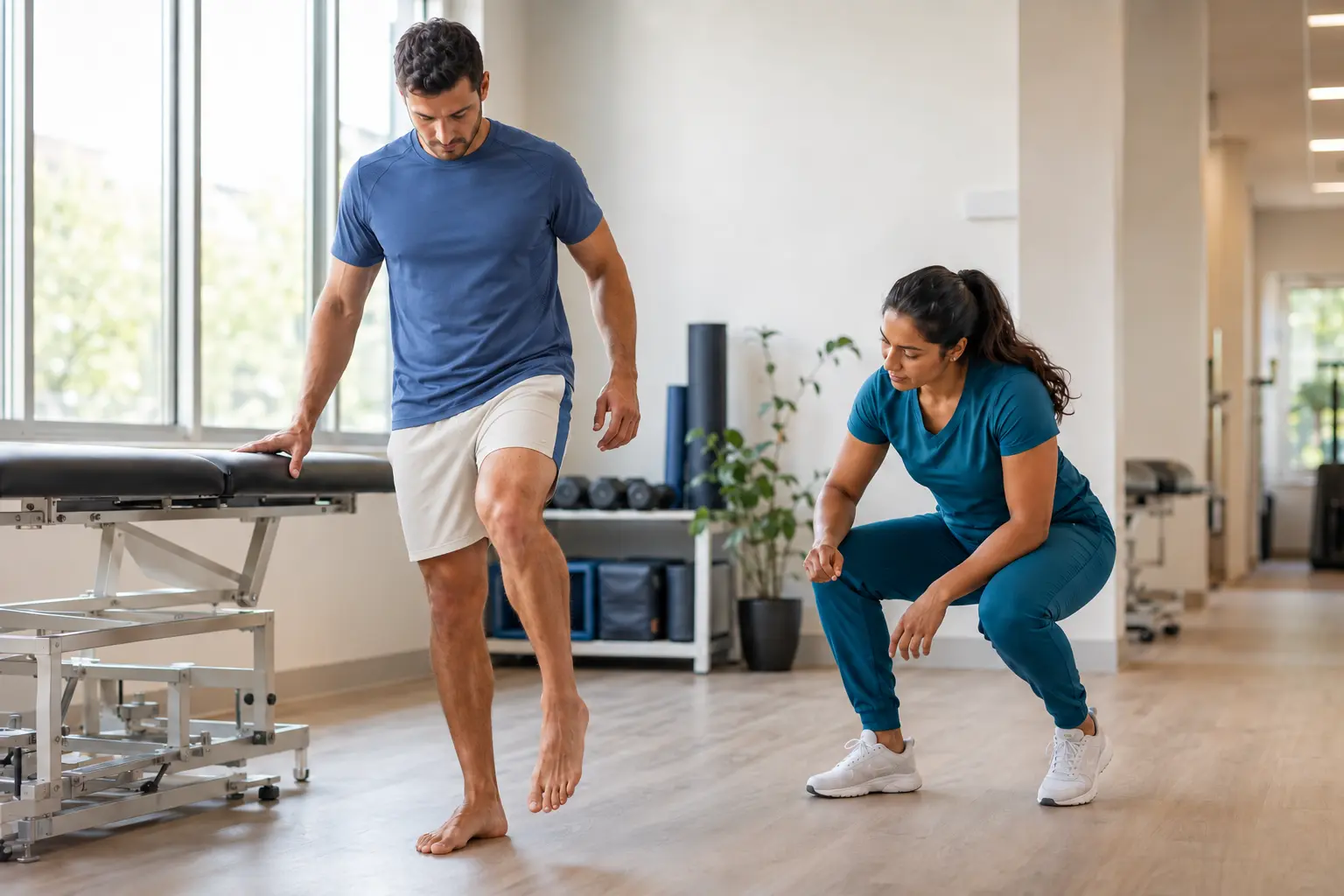
Foot shape, function, and ankle stability
Static posture describes structure. Loaded testing shows how the foot adapts, controls motion, produces force, and supports the ankle after repeated sprains.
Read the articleBarbell pain without abandoning training
Use a same-session audit to adjust load, range, volume, fatigue, or exercise selection while rebuilding a painful squat, deadlift, or press.
Read the article
Sciatica, radiating leg pain, and the neurologic examination
Radiating leg pain deserves more than a generic sciatica label. A neurologic and movement exam can narrow the pattern and guide a progressive return to activity.
Read the article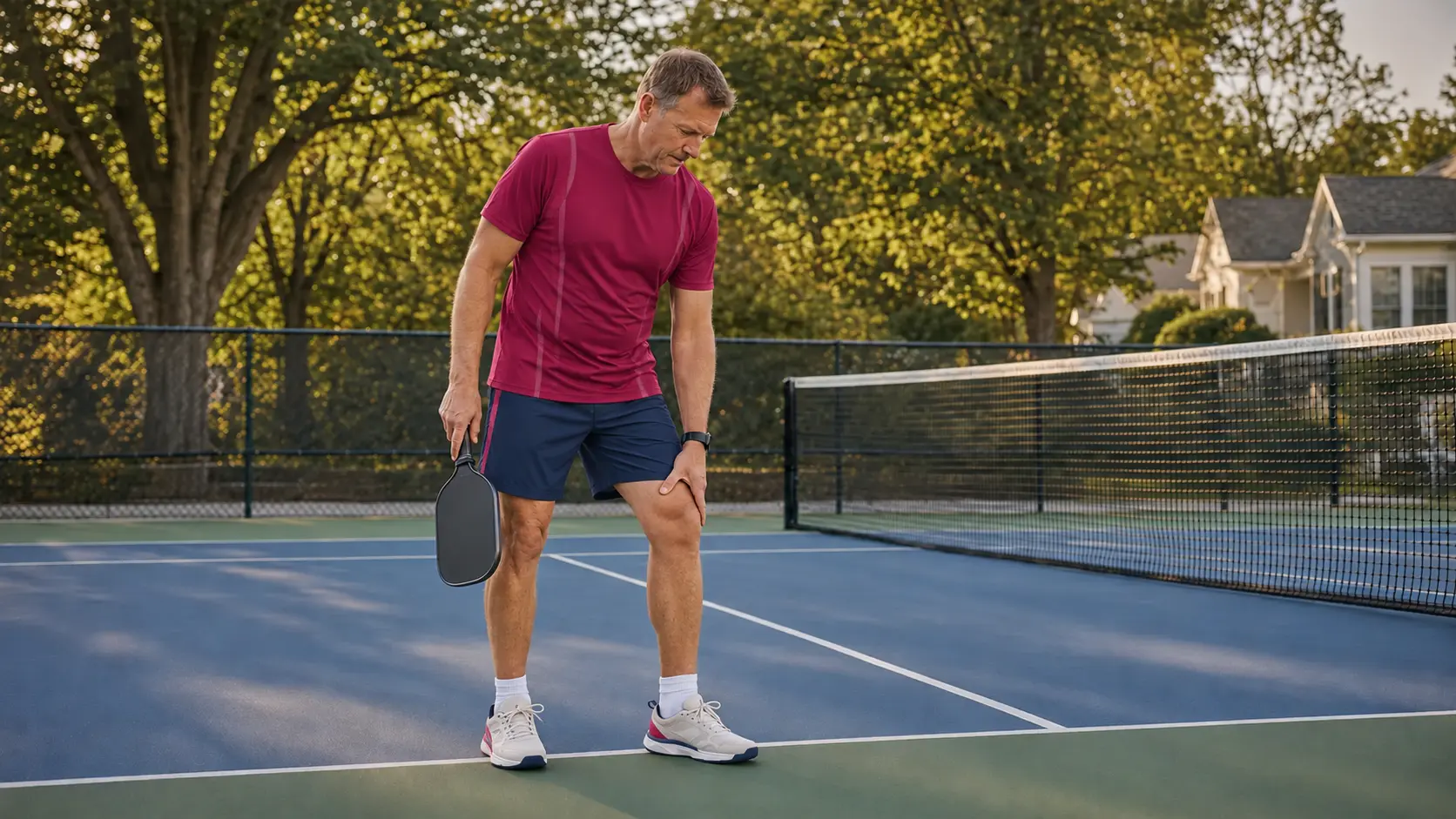
Pickleball knee pain and movement analysis
Knee pain does not automatically mean leaving the court. Symptom location, swelling, lunging, braking, and recovery can guide a more precise return-to-play plan.
Read the article
Hip pain and the whole movement chain
Hip pain does not always begin or end at the hip. A whole-chain exam helps identify which findings actually change symptoms—and which should not drive the plan.
Read the articleFocus 07
Spine
Neck, back, and radiating symptoms explained without fear, then matched to progressive movement and loading.
When hamstring tightness is not just short muscle
Persistent tightness can reflect limited motion, neural sensitivity, protective activity, or insufficient strength at longer muscle lengths. The examination separates them.
Read the articleBarbell pain without abandoning training
Use a same-session audit to adjust load, range, volume, fatigue, or exercise selection while rebuilding a painful squat, deadlift, or press.
Read the articleGolf back pain and the body–swing connection
Back pain does not have to end your season. Learn how the back, hips, upper spine, feet, swing timing, and practice load can be assessed and trained together.
Read the articleSciatica, radiating leg pain, and the neurologic examination
Radiating leg pain deserves more than a generic sciatica label. A neurologic and movement exam can narrow the pattern and guide a progressive return to activity.
Read the articleWhen neck pain travels beyond the neck
Neck, shoulder-blade, and arm symptoms can overlap. A focused exam can separate the likely patterns and build a plan for work, sleep, lifting, and overhead activity.
Read the articleHip pain and the whole movement chain
Hip pain does not always begin or end at the hip. A whole-chain exam helps identify which findings actually change symptoms—and which should not drive the plan.
Read the articleFocus 08
Dry Needling
How dry needling is selected, measured, and integrated with movement, strength, and progressive rehabilitation.
Dry needling vs. acupuncture
Both use thin filiform needles. At Limitless, dry needling begins with the movement that hurts, treats a relevant target, and checks the same movement again before rehabilitation continues.
Read the article
How dry needling fits physical therapy
See how a specific treatment target, immediate re-testing, neuromuscular re-education, and progressive loading belong in one coherent rehabilitation plan.
Read the articleWhy an old injury can still feel tight
Pain can resolve before motion, strength, position sense, and load tolerance are fully restored. A focused examination identifies what remains incomplete.
Read the articleWhen hamstring tightness is not just short muscle
Persistent tightness can reflect limited motion, neural sensitivity, protective activity, or insufficient strength at longer muscle lengths. The examination separates them.
Read the articleHypermobility pain beyond flexibility
Learn why hypermobile joints may hurt, how HSD differs from hEDS, why muscles can feel tight, and how to test one practical change without guessing.
Read the articleDry needling and hypermobility pain
Dry needling may address a reproducible muscle-related symptom, but it does not tighten ligaments. Learn how to test whether it changes a meaningful task.
Read the articleFocus 09
Stiffness, Stability & Old Injuries
When an area feels tight long after healing, look beyond stretching alone to the strength, coordination, sensitivity, and confidence the task still requires.
How dry needling fits physical therapy
See how a specific treatment target, immediate re-testing, neuromuscular re-education, and progressive loading belong in one coherent rehabilitation plan.
Read the articleWhy an old injury can still feel tight
Pain can resolve before motion, strength, position sense, and load tolerance are fully restored. A focused examination identifies what remains incomplete.
Read the articleWhen hamstring tightness is not just short muscle
Persistent tightness can reflect limited motion, neural sensitivity, protective activity, or insufficient strength at longer muscle lengths. The examination separates them.
Read the articleAnkle stiffness after an old sprain
Pain often resolves before weight-bearing motion, calf force, balance, and rapid force control return. Each quality can be measured and rebuilt.
Read the articleFoot shape, function, and ankle stability
Static posture describes structure. Loaded testing shows how the foot adapts, controls motion, produces force, and supports the ankle after repeated sprains.
Read the articleFocus 10
Foot & Ankle
Persistent ankle stiffness, repeated sprains, foot mechanics, balance, and the progressive work that restores mobility and load tolerance.
Achilles pain: rebuild the tendon for running
Achilles pain rarely improves through rest or stretching alone. Learn how tendon loading, calf strength, symptom response, and running demands shape a progressive return.
Read the articleShin pain: when to modify—and when to stop running
Not every painful shin is the same. Learn how symptom location, tenderness, training changes, and recovery help separate medial tibial stress syndrome from a possible bone stress injury.
Read the articleAnkle stiffness after an old sprain
Pain often resolves before weight-bearing motion, calf force, balance, and rapid force control return. Each quality can be measured and rebuilt.
Read the articleFoot shape, function, and ankle stability
Static posture describes structure. Loaded testing shows how the foot adapts, controls motion, produces force, and supports the ankle after repeated sprains.
Read the articleOne-on-one physical therapy in Columbia, Maryland
Need help applying this information to your symptoms or training?
Book an evaluation, or call first if you want to confirm whether Limitless Physiotherapy is the right fit for what you are dealing with.