
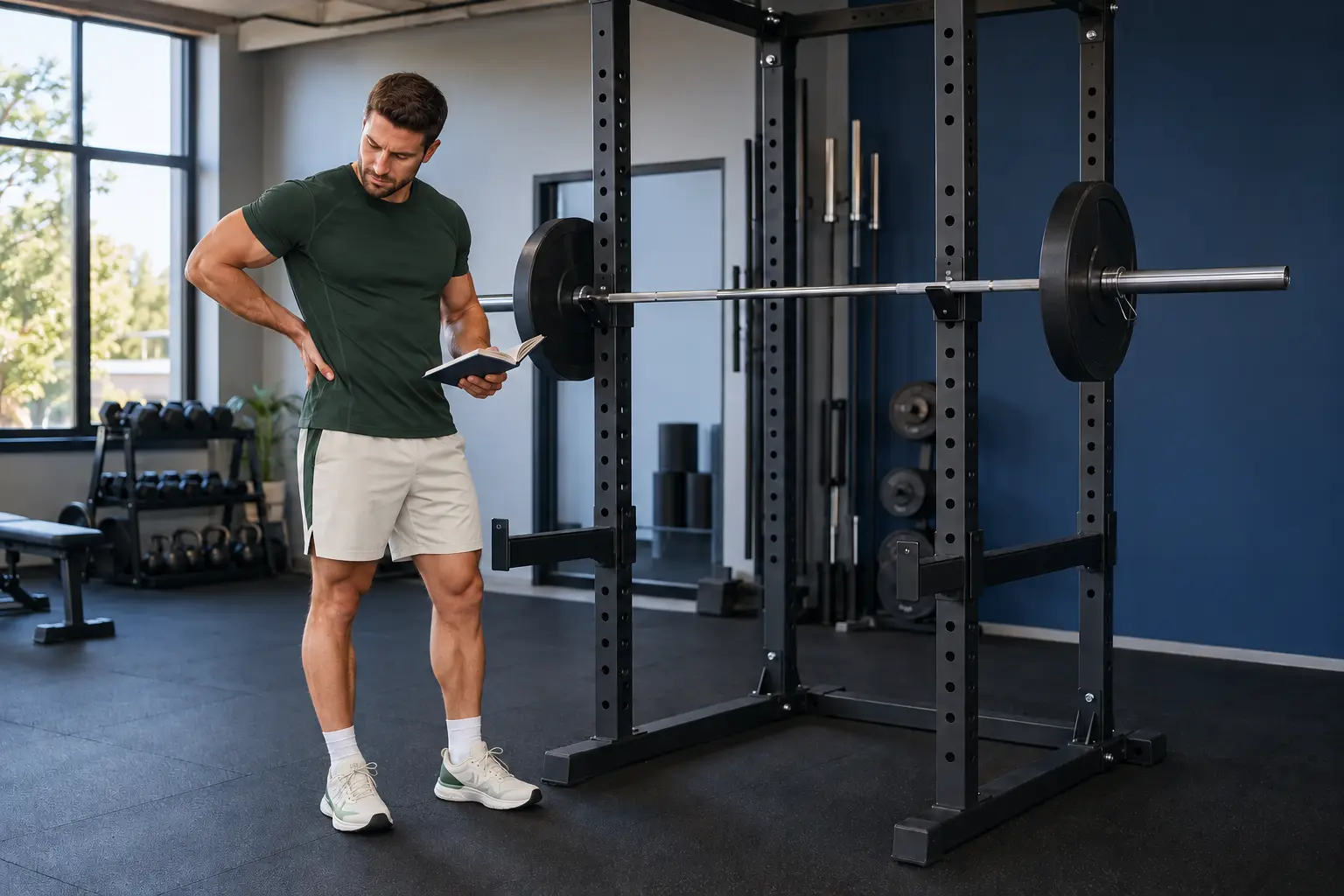
Barbell athletes notice details that generic rehabilitation can miss. The symptom may appear only below parallel, after the fourth work set, during touch-and-go deadlifts, off the chest in a bench press, or when a CrossFit workout combines a technical lift with breathing hard and moving fast.
Rest can make the area quieter without answering why the lift still feels limited. A useful evaluation respects the painful region, then tests the exact range, load, speed, volume, equipment, and fatigue conditions that make the problem appear.
The short answer
Pain during a lift can reflect a capacity problem, an acute injury, a workload change, or a technique-sensitive irritation.
The same symptom location can require very different decisions. One lifter may need medical assessment after a sudden pop, bruising, and strength loss. Another may continue training with a reduced range and fewer hard sets while rebuilding capacity. The history, examination, and response to a controlled modification determine which path makes sense.
Technique as a load-management variable
Technique redistributes load; there is no single correct shape for every lifter.
Stance width, bar position, grip, torso angle, depth, tempo, and intent all redistribute demand. Changing one of them may make a painful lift more tolerable, and that can be clinically useful. It does not prove the original technique was inherently dangerous.
Anthropometrics, mobility, equipment, sport rules, experience, and the weight on the bar influence how a lift looks. A cue is useful when it helps the lifter produce force, manage symptoms, or meet the competition or workout demand—not simply when the video resembles someone else's body.
Try this in your next session: change only one variable—load, range, tempo, stance, grip, or volume—then compare the target symptom during the next set and later that day. A change that helps you train is more informative than a form cue chosen only because it looks conventional.
A technique change is useful when it improves the target symptom, force output, confidence, or recovery. Looking more conventional on video is not enough.
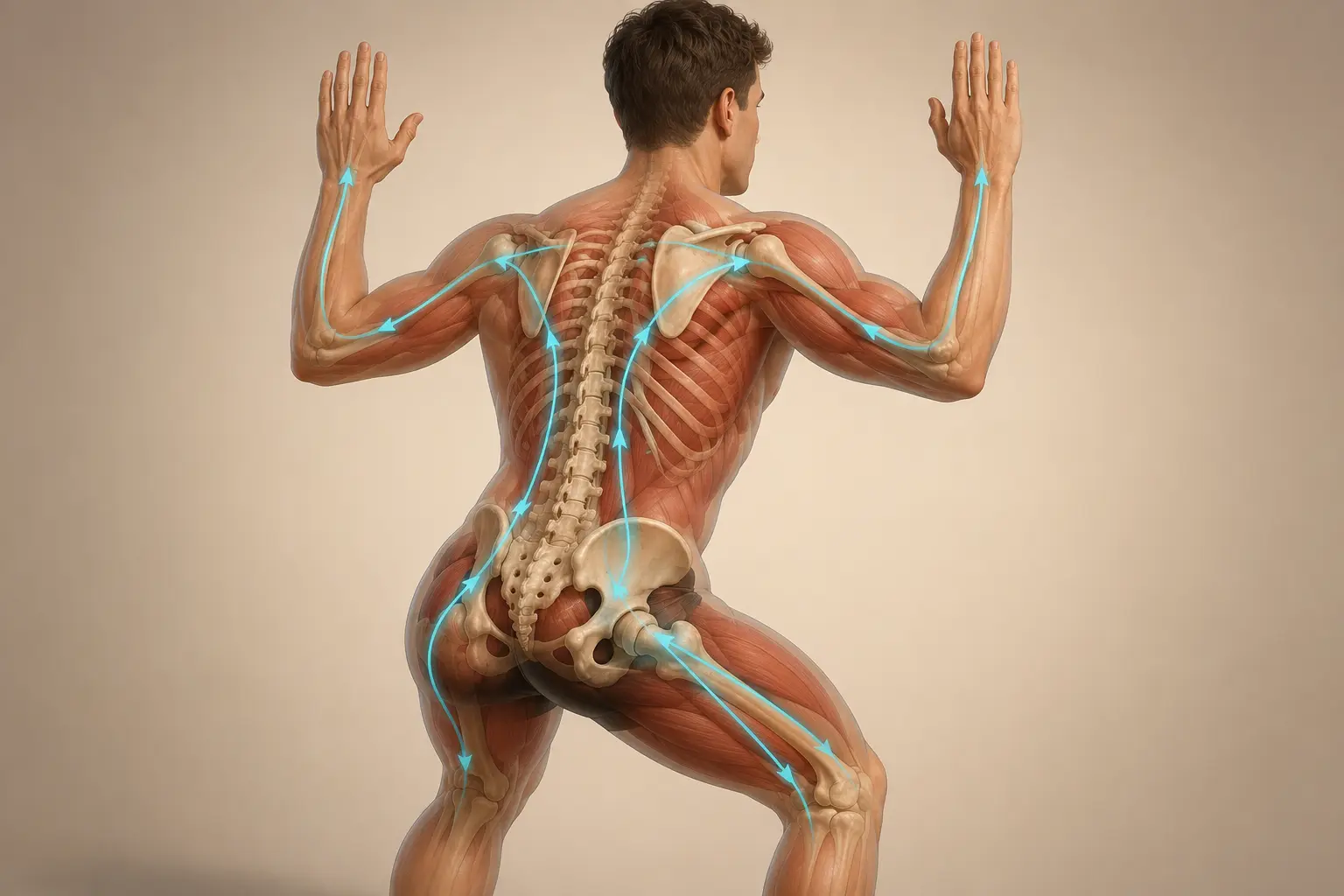
Modify before you abandon
Five variables can keep training productive while symptoms settle.
Range
Pull from blocks, squat to a higher target, or reduce press depth temporarily, then rebuild the missing range.
Load
Use a weight that preserves the intended stimulus without repeatedly escalating the familiar symptom.
Volume
Fewer hard sets or repetitions may reduce total irritation even when some meaningful intensity stays in the program.
Tempo & density
Slower repetitions, longer rests, or removing the clock can expose whether fatigue changes the problem.
Exercise selection and frequency form the fifth variable. A safety-bar squat, trap-bar pull, dumbbell press, tempo variation, or alternate training day can maintain a useful pattern while changing the most provocative demand. A variation is a bridge, not automatically the final destination.
A same-session audit
Find the first variable that makes the lift tolerable without erasing the training goal.
- 01
Reproduce the familiar symptom once.
Record the load, range, repetition number, speed, and what came before it. Do not repeatedly provoke a high-irritability symptom just to prove it is present.
- 02
Reduce one variable.
Try roughly 10–20% less load, a slightly shorter range, fewer repetitions, a reset between reps, or more rest. Keep the other conditions similar.
- 03
Keep a useful stimulus.
If the modification helps, use two or three controlled work sets with two to four repetitions still available rather than turning the session into repeated testing.
- 04
Check the rest of the day and next morning.
A successful set is more convincing when ordinary activity and the next planned training exposure also remain manageable.
Pain only near squat depth
Trial a box or pins just above the irritable range, keep meaningful load, and lower the target gradually instead of avoiding depth indefinitely.
Pain only from the floor
Trial a block pull or elevated trap-bar pull, then reduce the starting height as floor-pull tolerance returns.
Pain only at the bottom of a press
Trial a floor press, pin press, neutral grip, or slightly reduced range while preserving a tolerable pressing stimulus.
Respect the demands of each lift
The symptom tells you where to start. The lift tells you what to test.
Squat
Depth, stance, footwear, bar position, bracing, knee and hip contribution, and tolerance across repeated sets may all change the demand.
Deadlift
Starting height, stance, grip, bar type, tempo, reset versus touch-and-go repetitions, and fatigue can make the same load a different task.
Press
Grip width, shoulder position, press angle, range, bar path, upper-back strategy, weekly volume, and the balance of pressing and other training all matter.
Research reviews identify the lower back or pelvis, shoulder, and upper extremity among commonly reported injury areas in strength sports. The data are heterogeneous and often self-reported; they do not prove that one lift or technique causes a given person's pain. They do support examining the body region and the task together.
The workout changes the movement
CrossFit adds density, transitions, and fatigue to the barbell problem.
A clean deadlift performed fresh is not the same task after rowing, box jumps, or high-repetition gymnastics. A shoulder that tolerates strict presses may respond differently to kipping, handstand work, and fast cycling. Rehabilitation therefore has to progress both the movement and the environment in which it appears.
- Scale the skill without removing every meaningful training stimulus.
- Separate strength from density before combining heavy, fast, and fatigued work again.
- Rebuild transitions because symptoms may appear when movements are linked, not when each is tested alone.
- Track the next-day response rather than judging readiness from one successful workout.
A barbell-specific evaluation
The examination should answer four practical decisions.
- 01
Is this a routine training problem or an injury needing medical workup?
Mechanism, bruising, swelling, deformity, neurologic findings, strength loss, and symptom progression set the safety boundary.
- 02
Which exact exposure reproduces it?
The problem may depend on range, intensity, repetitions, bar type, fatigue, or the exercises that came before it.
- 03
What can stay in training now?
Maintaining tolerable strength and conditioning often makes the return more specific and less disruptive.
- 04
What capacity must be rebuilt?
Local strength, endurance, mobility, bracing, rate of force, confidence, and repeated exposure may each matter depending on the athlete.
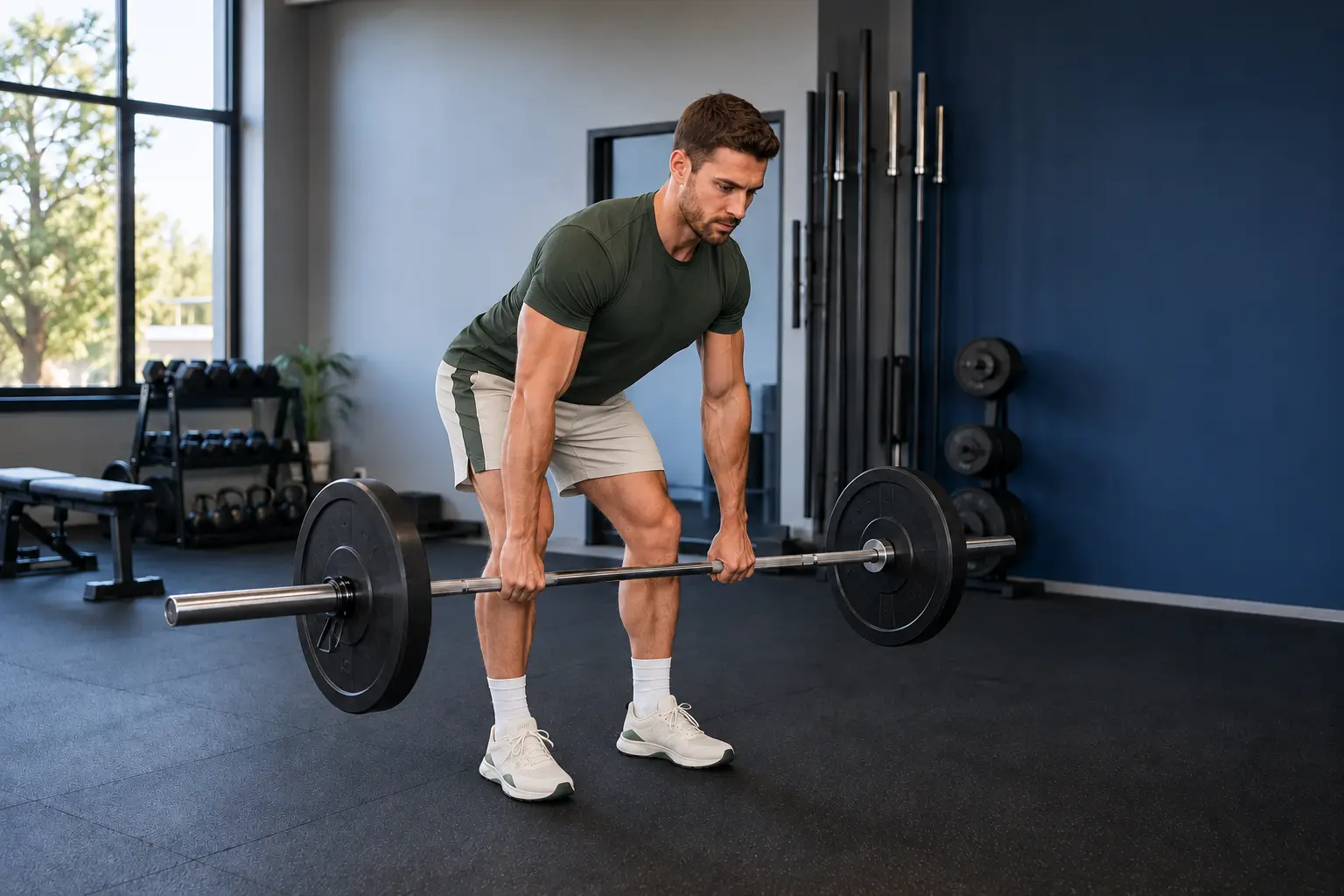
A composite clinical pattern
Progressing painful floor pulls within a full training week.
This example combines patterns seen in practice; it does not describe one identifiable patient. Individual presentations and results vary.
Consider a powerlifter whose back pain began after a rapid increase in deadlift volume. Heavy pulls from the floor are irritable, but the neurologic examination is reassuring and block pulls at moderate load feel controlled. The lifter can continue squatting and upper-body work while floor-pull tolerance is rebuilt.
The plan might retain block pulls, reduce the number of hard hinge sets, build trunk and hip capacity, and gradually lower the starting height. Later phases restore intensity and competition-specific fatigue. The outcome is not one pain-free test in the clinic; it is a repeatable training week.
Common questions
Practical answers for the next step.
Does pain during a lift mean my form is bad?
Not necessarily. Technique changes how load is distributed, so it can matter, but pain can also reflect a recent volume increase, fatigue, local tissue irritation, prior injury, recovery, or a medical condition. A useful technique change should improve the target symptom or training response—not merely look more textbook.
Should I stop lifting completely?
Sometimes temporary restriction is appropriate after an acute injury or when red flags are present. In many overuse or nontraumatic presentations, training can continue in a modified form by changing load, range, volume, speed, exercise selection, or frequency while the limiting capacity is rebuilt.
Is rounding my back during a deadlift always dangerous?
No. A 2020 systematic review found low-quality evidence that greater lumbar flexion during lifting was not a risk factor for low back pain onset or persistence; people with low back pain often lifted with less flexion. That does not mean load, fatigue, symptoms, or technique are irrelevant. It means one visible spinal position alone cannot determine risk or prescribe rehabilitation.
Can I bench press with shoulder pain?
That depends on the presentation. Grip width, range, load, weekly pressing volume, shoulder motion, strength, and symptom response can be adjusted. A sudden injury, substantial weakness, instability, bruising, deformity, or progressive loss of function requires a more cautious assessment.
What is different about CrossFit rehabilitation?
CrossFit often combines lifting, gymnastics, conditioning, speed, and fatigue in the same session. Rehabilitation therefore has to rebuild the movement itself and the ability to perform it within the density, transitions, and fatigue of a workout—not only as a fresh isolated repetition.
When am I ready to return to heavy training?
Readiness is a progression rather than one test. It includes the diagnosis and healing constraints, tolerable warm-ups and submaximal work, objective strength and task capacity, repeat exposure under fatigue, confidence, and a response that recovers as expected before intensity and volume are restored.

Written & clinically reviewed by
Dr. Brandon Lim, PT, DPT, CMTPT, FMSC
Dr. Lim is the founder of Limitless Physiotherapy in Columbia, Maryland. His one-on-one approach integrates detailed examination, movement assessment, manual therapy, dry needling, and progressive exercise according to each person's presentation and goals.
Meet Dr. LimSelected sources
Evidence behind the discussion.
- Tung MJY, et al. Injuries in weightlifting and powerlifting: an updated systematic review. BMJ Open Sport & Exercise Medicine, 2024.
- Bengtsson V, Berglund L, Aasa U. Narrative review of injuries in powerlifting with special reference to their association to the squat, bench press and deadlift. BMJ Open Sport & Exercise Medicine, 2018.
- Gean RP, et al. A systematic review and meta-analysis of injury in CrossFit. Journal of Surgical Orthopaedic Advances, 2020.
- Ardern CL, et al. 2016 consensus statement on return to sport from the First World Congress in Sports Physical Therapy, Bern. British Journal of Sports Medicine, 2016.
- Soligard T, et al. How much is too much? International Olympic Committee consensus statement on load in sport and risk of injury. British Journal of Sports Medicine, 2016.
- Saraceni N, et al. To flex or not to flex? Is there a relationship between lumbar spine flexion during lifting and low back pain? A systematic review with meta-analysis. Journal of Orthopaedic & Sports Physical Therapy, 2020.
When a barbell injury needs prompt medical attention.
Evidence note: Strength-sport injury reviews mainly describe injury rates and body regions, and research on lumbar flexion during lifting is largely observational. Neither can prove that one visible technique feature caused an individual athlete's pain.
Seek prompt assessment after a sudden pop with bruising, deformity, major swelling, inability to bear weight or use the limb, substantial new weakness, or suspected fracture, dislocation, tendon rupture, or other acute structural injury.
New bowel or bladder changes, saddle-region numbness, progressive neurologic loss, fever with severe pain, chest pain, shortness of breath, or other systemic symptoms require urgent medical evaluation rather than routine training modification.
Explore one-on-one sports rehabilitation or read the related guide to strength training with hypermobility.