

People with symptomatic hypermobility often describe a frustrating mix: generous joint range, yet muscles that feel persistently tight, knotted, or exhausted. Dry needling can be appealing because it may reach a focal, reproducible muscle symptom that massage or stretching has not changed for long.
That does not make the muscle the whole diagnosis. It means the muscle may be one part of the presentation—and that a short-term change may create an opportunity to move, load, or train differently.
The short answer
Dry needling can create a useful opening when one overworked muscle is blocking movement.
The goal is not to tighten connective tissue. It is to calm a familiar, reproducible muscular symptom enough to make reaching, turning, gripping, or training easier—then use that short-term change for the strength and control the joint still needs. The same movement is checked before and after treatment so the response is clear rather than assumed.
Muscular demand in hypermobility
Why increased joint motion can coexist with persistent muscular tightness.
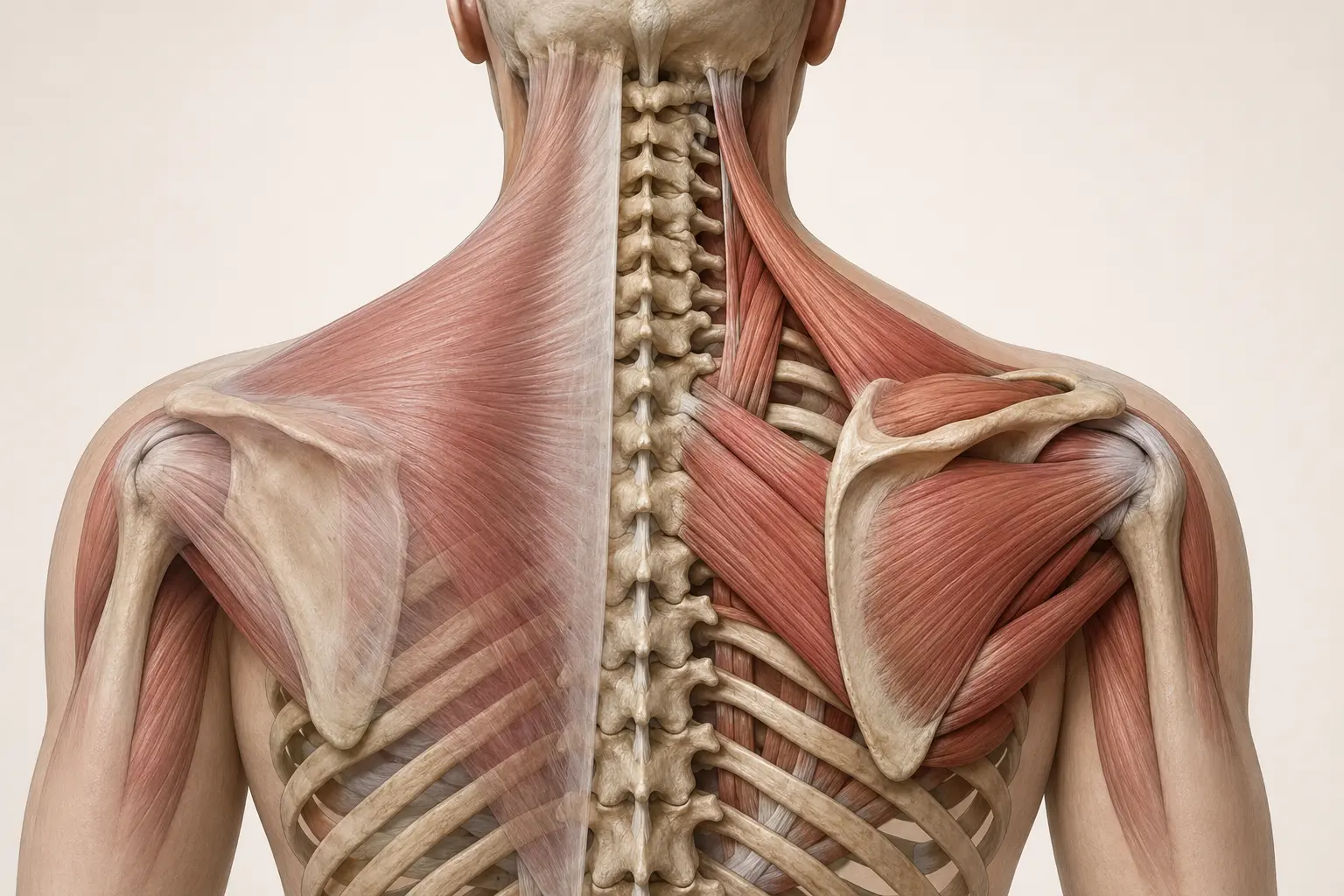
Muscles do more than produce movement. They also help manage joint position, absorb force, and create a sense of security. A muscle may increase its activity around a joint that feels unstable, after a prior sprain or subluxation, during fatigue, or when the current training and daily workload exceed capacity.
That protective work can become uncomfortable. The area may feel ropey or tender, and movement may temporarily improve after hands-on care or needling. But if the same demand remains unchanged, the muscle may return to the same strategy. This is why symptom relief and capacity building belong in the same conversation.
Control demand
The muscle may be working harder to manage a joint through range or under load.
Local sensitivity
A muscle or tendon can become irritable after a new exposure, repeated effort, or injury.
System load
Sleep, fatigue, stress, autonomic symptoms, and widespread sensitivity can change recovery capacity.
When dry needling has a defined role
Three findings make dry needling clinically relevant.
- 01
The target reproduces a familiar symptom.
The muscle finding should connect to the complaint—not merely feel tender when someone presses hard enough.
- 02
There is a meaningful test before treatment.
Reach, rotation, grip, squat, gait, or another relevant task gives the response context.
- 03
The change can be used immediately.
If pain or motion improves, movement and loading help determine whether that response supports a larger goal.
The key boundary is simple: dry needling may change a selected muscular symptom. It does not tighten a ligament, alter collagen, or treat the connective-tissue diagnosis itself.
Make the change carry forward
Short-term symptom relief needs a movement and loading follow-up.
- Use the easier movement now. Practice the reach, turn, grip, or squat while the familiar symptom is quieter.
- Build strength and endurance. Progress the capacity required for work, parenting, lifting, running, or sport.
- Adjust the workload that keeps provoking it. Training density, sleep, recovery, and total weekly demand can keep an overworked muscle in the same cycle.
- Return to the real task. The plan should gradually reproduce the range, repetition, speed, fatigue, and confidence the activity requires.
A reason to use it—or stop repeating it
Dry needling should change a relevant task, not only how tender a spot feels.
Before
Choose one repeatable task and record pain, range, force, or ease before treatment.
Immediately after
Repeat the same task for two or three controlled repetitions. Do not substitute a different test because it looks better.
Use the change
If the task improves, practice a related movement for one or two modest sets while the new option is available.
Reassess later
Note whether function stayed easier and whether soreness, bruising, or fatigue outweighed the benefit.
Reconsider repeating the same treatment when there was no clear baseline, only pressure tenderness changed, the functional effect is absent or shrinking, or the person is accumulating bruising and soreness without improved loading capacity. More needles are not a progression.
What matters after the needle comes out
Short-term relief is most valuable when it immediately improves something you need to do.
Research across common musculoskeletal pain conditions supports short-term pain relief for some people. In the clinic, that matters when the same reach, turn, squat, grip, or walking task becomes easier immediately afterward. That change gives us a better opportunity to practice movement and apply load with less guarding.
For example, if an aching upper shoulder eases but sustained reaching still fades quickly, the next step is not more needles by default. It may be shoulder-blade endurance, trunk support, a temporary change in pressing volume, or a more gradual return overhead. The treatment earns another use when it repeatedly helps the larger plan move forward.
A measured clinical process
How dry needling should fit into a one-on-one visit.
- 01
Choose the movement that matters.
Start with the reach, turn, grip, squat, or other task the muscle symptom is limiting.
- 02
Choose one relevant target.
Treatment should follow a clinical hypothesis rather than needle every tender area.
- 03
Use the smallest useful dose.
A focused first treatment makes the before-and-after response easier to understand.
- 04
Re-test immediately.
The same meaningful sign or task is repeated. No change is useful information and may mean the tool does not belong in the plan.
- 05
Load the useful change.
Movement, strength, or task practice uses the improved symptom or motion and helps determine what the person can recover from.

A composite clinical pattern
A painful shoulder muscle can be relevant without becoming the whole story.
This example combines patterns seen in practice; it does not describe one identifiable patient. Individual presentations and results vary.
An active adult with generalized hypermobility reports a familiar ache from the upper shoulder into the shoulder blade after desk work and overhead training. Palpation of one muscle reproduces the familiar symptom, but the examination also finds early fatigue during sustained reaching and a sharp rise in weekly pressing volume.
Dry needling may reduce the focal ache and make reaching feel easier that day. The plan then uses that response for shoulder and trunk endurance, a temporary training adjustment, and graded return to overhead volume. If needling repeatedly produces no meaningful change, it should not continue by habit.
Common questions
Practical answers for the next step.
Can dry needling tighten loose ligaments?
No. Trigger point dry needling targets a selected muscle or related symptom response. It does not shorten a ligament, change collagen, or correct the underlying connective-tissue features of HSD or hEDS.
Is there strong research specifically on dry needling for hEDS or HSD?
No. Dry needling has been studied across several musculoskeletal pain conditions, but direct condition-specific evidence for hEDS or HSD is limited. Any benefit should be framed as an individualized response to a reproducible muscle-related component, not proof that dry needling treats hypermobility itself.
Why can a hypermobile person have painful trigger-point-like symptoms?
Muscles may work harder to control an irritable or unstable-feeling joint, compensate for a capacity gap, or respond to repeated training and daily load. Tenderness can also be influenced by sleep, fatigue, nervous-system sensitivity, and local injury. A tender point alone does not establish the whole cause.
How do you know whether dry needling helped?
A meaningful sign or task is measured before treatment and repeated afterward. Examples include reaching, rotating the neck, loading a hip, gripping, squatting, or another movement tied to the person’s complaint. Less tenderness without a useful change is incomplete information.
What side effects can occur?
Temporary soreness, small amounts of bleeding, bruising, and discomfort during treatment are commonly reported minor adverse events. More serious events are less commonly reported in prospective surveys but remain possible, and the exact population risk is uncertain. Informed consent, anatomy, sterile technique, appropriate screening, and trained clinical judgment matter.
Do I need dry needling to recover?
No. It is an optional adjunct, not a requirement. Some people value the short-term change it creates; others prefer or respond better to different approaches. A complete plan still addresses movement, strength, workload, recovery, and any necessary medical coordination.

Written & clinically reviewed by
Dr. Brandon Lim, PT, DPT, CMTPT, FMSC
Dr. Lim is the founder of Limitless Physiotherapy in Columbia, Maryland. His one-on-one approach integrates detailed examination, movement assessment, manual therapy, dry needling, and progressive exercise according to each person's presentation and goals.
Meet Dr. LimSelected sources
Evidence behind the discussion.
- Hakim A. Hypermobile Ehlers-Danlos Syndrome. GeneReviews, updated 2024.
- Gattie E, Cleland JA, Snodgrass S. The effectiveness of trigger point dry needling for musculoskeletal conditions: a systematic review and meta-analysis. JOSPT, 2017.
- Chys M, et al. Clinical effectiveness of dry needling in patients with musculoskeletal pain—an umbrella review. Journal of Clinical Medicine, 2023.
- Boyce D, et al. Adverse events associated with therapeutic dry needling. International Journal of Sports Physical Therapy, 2020.
- Kearns GA, et al. Lack of standardization in dry needling dosage and adverse-event documentation limits outcome and safety reports. Journal of Manual & Manipulative Therapy, 2023.
- Pandya J, et al. Dry needling versus manual therapy for mechanical neck pain: a randomized clinical trial. JOSPT, 2024.
Safety and consent still matter.
Evidence note: Direct research in HSD and hEDS remains limited, and studies from other pain conditions do not show that dry needling treats hypermobility itself. Comparative research also does not make needling universally superior to other well-delivered physical therapy care.
In one prospective therapist-reported survey covering 20,494 dry needling sessions, bleeding (16%), bruising (7.7%), and pain during needling (5.9%) were the most frequently reported minor events. Twenty events classified by the investigators as major were reported, a rate below 0.1% in that sample. Because the survey used a convenience sample, had a low response rate, and relied on clinician self-report, those numbers should not be treated as a definitive population risk estimate. Serious complications remain possible. Appropriate training, knowledge of anatomy, sterile technique, conservative dosing, screening, and informed consent are essential.
Tell your clinician about bleeding disorders, blood-thinning medication, pregnancy, immune or skin concerns, prior fainting or needle reactions, recent surgery, implants, and other relevant medical conditions. Dry needling is always optional; declining it should not reduce the quality of your care.
Read next: how to build strength and control with hypermobility.