
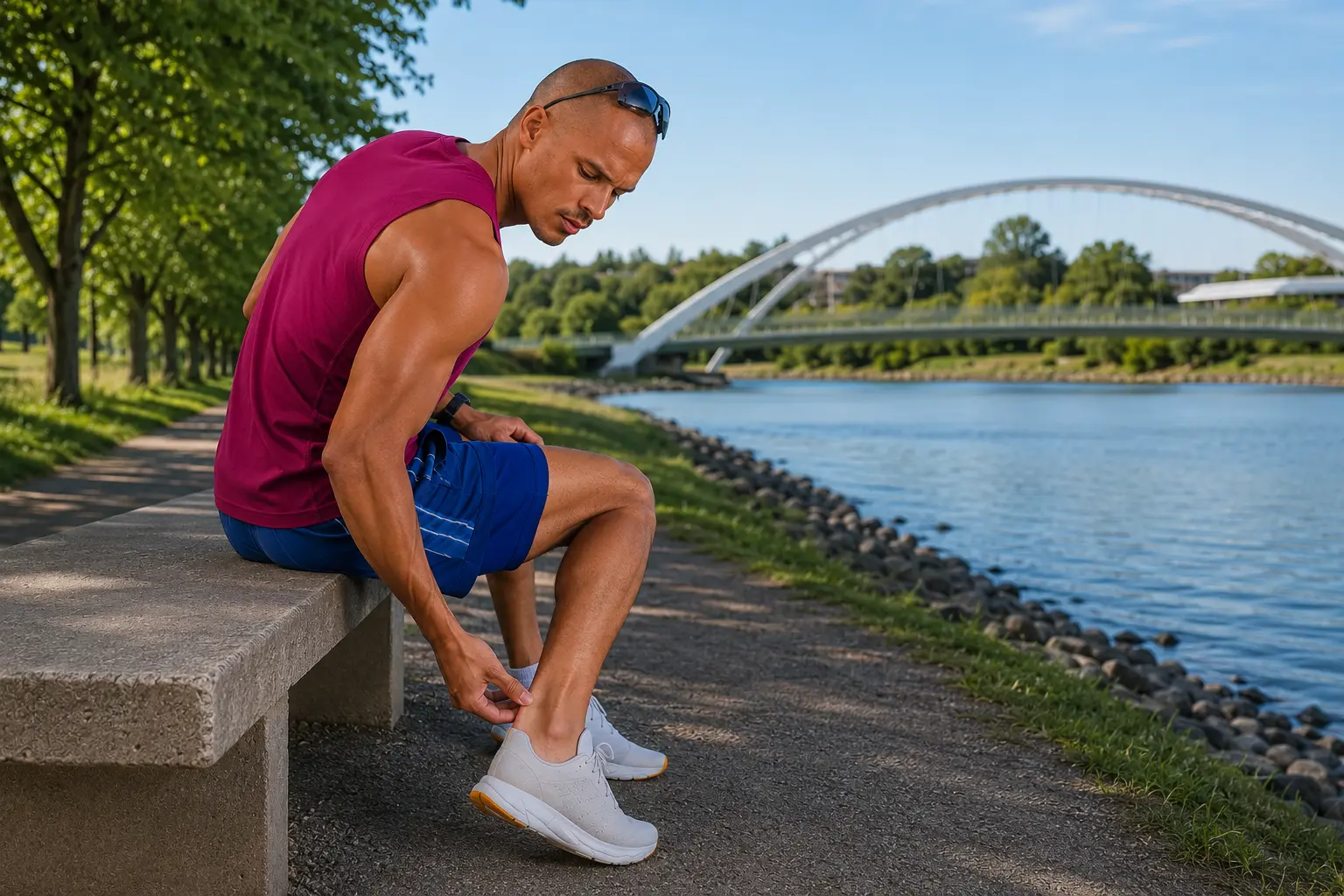
Achilles pain can be confusing because it may loosen as you warm up. The first steps in the morning hurt, the beginning of the run feels stiff, and then the tendon settles—until it becomes sore again later or the next day. That warm-up effect can make a runner believe the problem has disappeared when the current load is still exceeding capacity.
That inconsistency is what makes Achilles pain so difficult to judge. A runner can feel encouraged halfway through one run and discouraged again with the first steps out of bed the next morning. The useful question is not whether the tendon felt quiet in one moment; it is whether the full response shows that the load was absorbed.
The answer is rarely endless rest, aggressive stretching, or one famous eccentric protocol copied from the internet. Achilles rehabilitation is a progression of load: enough to stimulate adaptation, organized so the tendon and calf can recover, and eventually fast enough to prepare for running.
The short answer
Achilles tendinopathy usually needs progressive tendon loading—not complete shutdown and not passive care alone.
Midportion Achilles tendinopathy typically produces load-related pain and stiffness in the tendon several centimeters above the heel. Insertional pain occurs at the heel attachment and may be more sensitive to compression in deep ankle dorsiflexion. A sudden pop, rapid swelling, bruising, or loss of push-off raises a different concern and requires prompt assessment for rupture.
The 2024 clinical practice guideline recommends tendon-loading exercise as a first-line treatment, using loads as high as tolerated and performed at least three times per week. The exact exercise style can vary. What matters is that the program progressively restores force, endurance, rate of loading, and the ability to repeat those demands during running.
Which Achilles pattern?
Pain location and symptom behavior determine what should be loaded—and how.
Midportion symptoms are usually felt two to six centimeters above the heel, often with morning stiffness and pain during repeated heel raises, hopping, or running. Insertional symptoms sit directly where the tendon meets the heel. That distinction matters because dropping the heel deeply below a step can increase compression at the insertion and may be poorly tolerated early in rehabilitation.
Not every pain behind the ankle is tendinopathy. The examination considers the calf, paratenon, plantaris region, heel bursa, posterior ankle, nerve-related symptoms, and partial or complete rupture. Ultrasound or MRI is not routinely required for a straightforward presentation, but imaging can help when the diagnosis is uncertain, recovery is not following the expected pattern, or a tear or another condition is suspected.
- Midportion: pain and stiffness in the tendon above the heel, commonly aggravated by repeated loading.
- Insertional: pain at the heel attachment, often sensitive to shoe pressure or deep dorsiflexion.
- Possible rupture: a sudden pop, bruising, loss of push-off, or inability to perform a heel raise needs prompt assessment.
- Other sources: bursa, posterior ankle, calf, neural, and referred symptoms may require a different plan.
Why rest is not enough
The tendon becomes ready for running by tolerating progressively more load—not by avoiding load indefinitely.
Many runners have already learned that rest can quiet the tendon without restoring confidence or capacity. A short reduction in provocative running may be necessary when walking or daily activity is painful. But complete rest does not restore calf strength or prepare the tendon for the high forces and rapid loading rates of running. Symptoms often return when the runner jumps from quiet daily life back to normal mileage without rebuilding the missing steps between them.
Pain can be used as one monitoring signal, not the only decision. Track morning stiffness, walking, heel-raise quality, the response during exercise, and the reaction later that day and the next morning. A stable and tolerable response may allow progression; rising morning pain, declining function, or a response that lasts longer after each session suggests the dose is too aggressive.
Magnitude
How much force the tendon and calf must produce.
Rate
How quickly force is applied during hopping, faster running, and hills.
Volume
How many repetitions, steps, and running contacts accumulate before recovery.
A tendon-and-runner evaluation
Measure calf force, endurance, ankle function, and the training demand that exposed the gap.
The clinical examination maps the exact pain location and checks tendon response to palpation, heel raises, hopping, and other loading tests. Single-leg heel-raise height and repetition quality show more than whether the runner can simply get onto the toes. Bent-knee and straight-knee testing can reveal different calf deficits, while ankle and foot motion may change how force is managed.
Training history completes the picture. Speed sessions, hills, sudden long runs, a change in shoes, increased court sport, or returning after illness can alter Achilles demand. Running analysis is useful when it answers a specific question—such as whether overstriding, step rate, or limited push-off is changing symptoms—not as a ritual every injured runner must complete. The runner should understand what the measurements mean: which deficit matters now and what must change before speed, hills, or longer runs return.

- 01
Classify the location.
Midportion, insertional, calf, heel, and posterior-ankle symptoms are not interchangeable.
- 02
Measure capacity.
Heel-raise height, repetitions, force, ankle motion, and tolerance to faster loading.
- 03
Map the training spike.
Identify changes in distance, speed, hills, surfaces, shoes, and total sport load.
- 04
Set a baseline.
Choose a repeatable symptom and performance measure to guide the next dose.
Progressive tendon loading
There is no single magical heel-raise program. The progression must reach the force and speed your running requires.
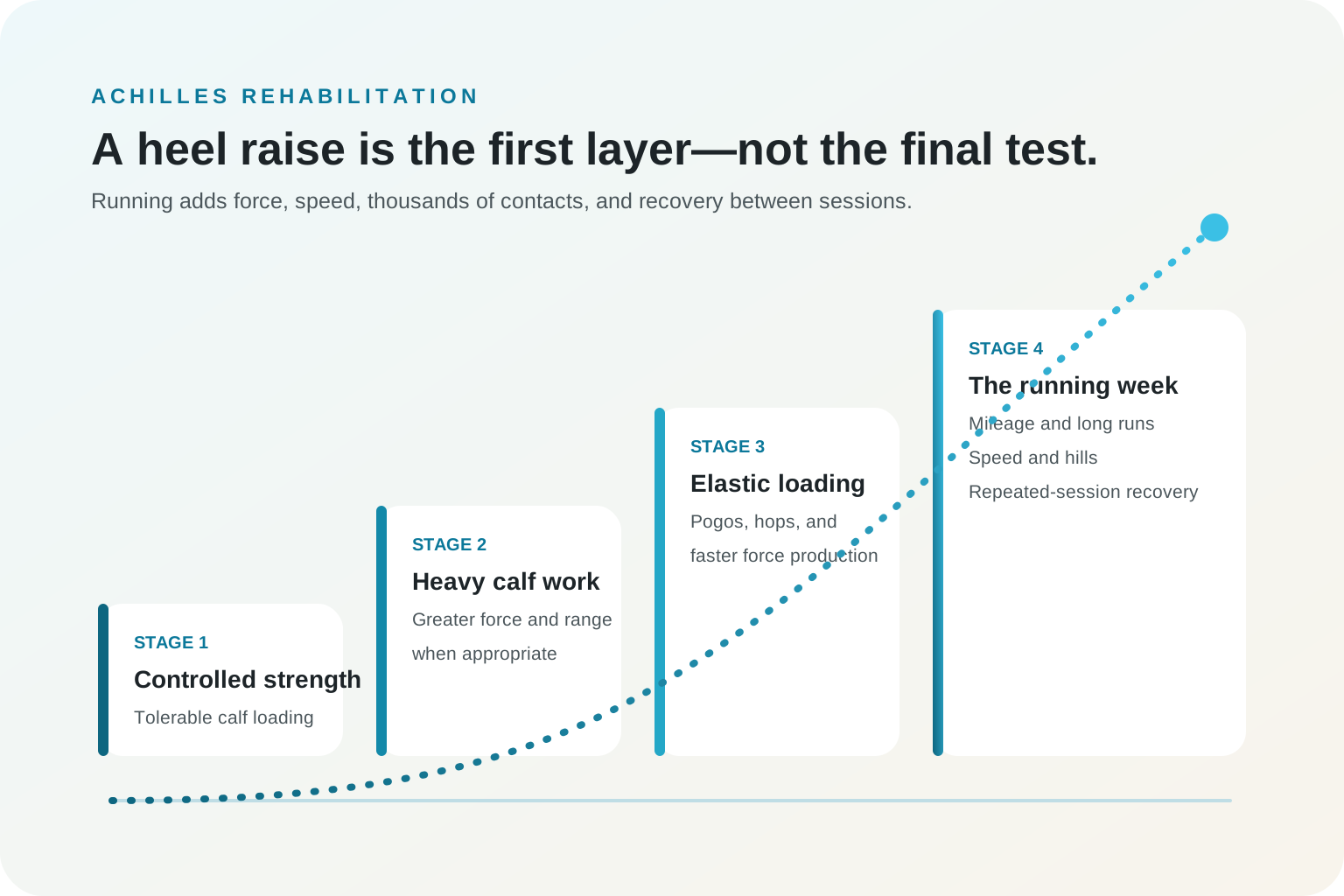
Early loading may begin with isometrics or seated heel raises when standing work is too irritable. It can progress to bilateral and single-leg raises, heavier resistance, greater range when appropriate, and eventually faster stretch-shortening work such as pogo hops and running drills. Each stage solves a different problem; high repetition alone does not guarantee adequate strength or rate tolerance.
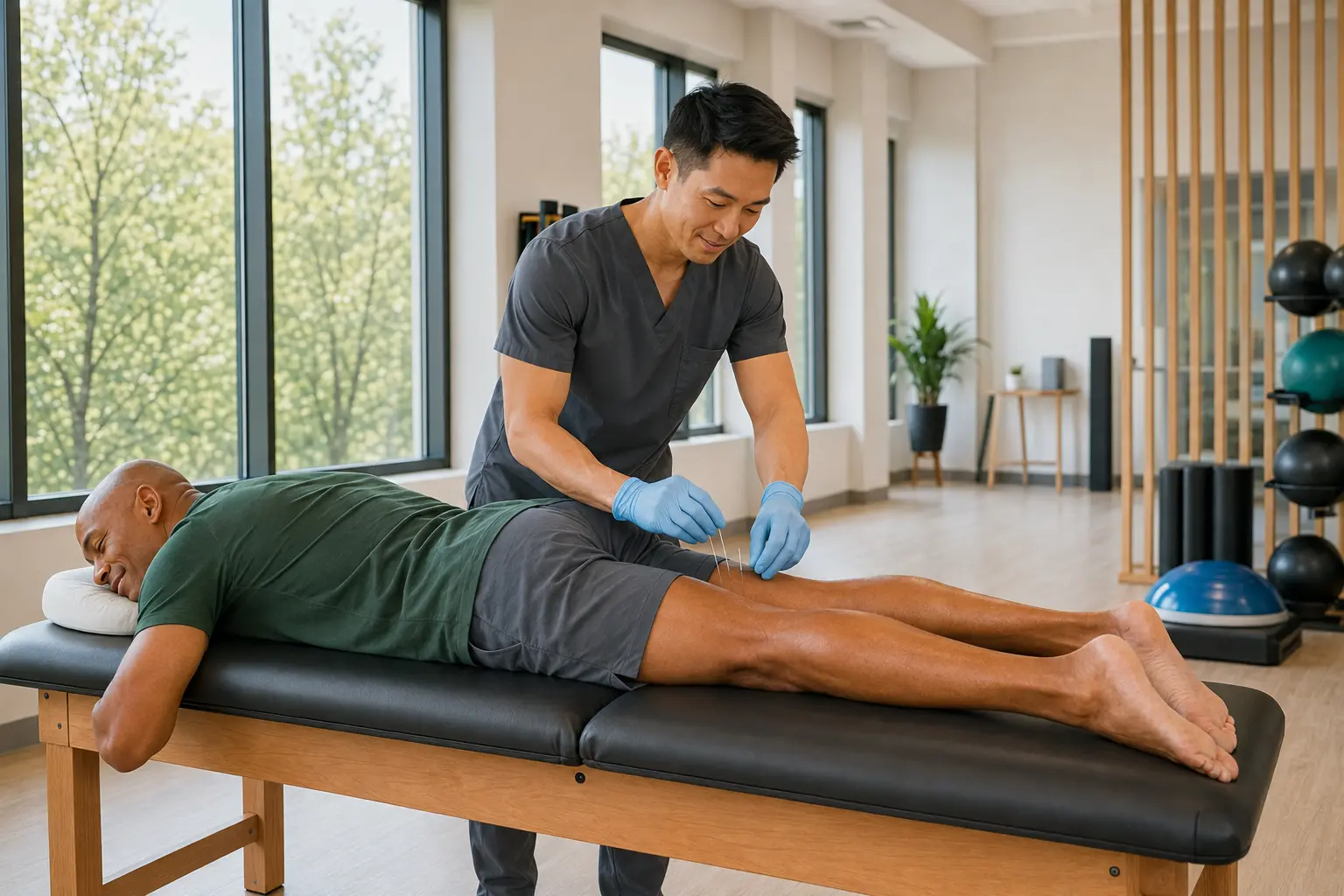
Hands-on treatment can support the plan when a measured ankle or foot restriction is limiting a heel raise or when a distinct calf component is affecting comfort or force. Dry needling may be considered for that muscular component, but it is not presented as tendon regeneration. Dr. Lim performs the treatment and repeats the relevant heel raise or movement; any useful change is then carried into active loading rather than treated as the finished result.
Temporary heel lifts can reduce dorsiflexion demand for some people. For chronic insertional Achilles tendinopathy, a 2025 randomized trial in sport-active adults found better pain and function with a progressive program that limited tendon compression through modified dorsiflexion, heel lifts, and avoidance of calf stretching than with a higher-compression program. That finding applies to the insertional presentation studied; it should not be turned into a rule that every Achilles needs less motion.
Slow strength
Restore force with tolerable, progressively heavier calf and tendon loading.
Elastic capacity
Add faster loading, hopping, and repeated contacts when strength and symptoms allow.
Running specificity
Prepare for the actual pace, hills, distance, and training density in the goal.
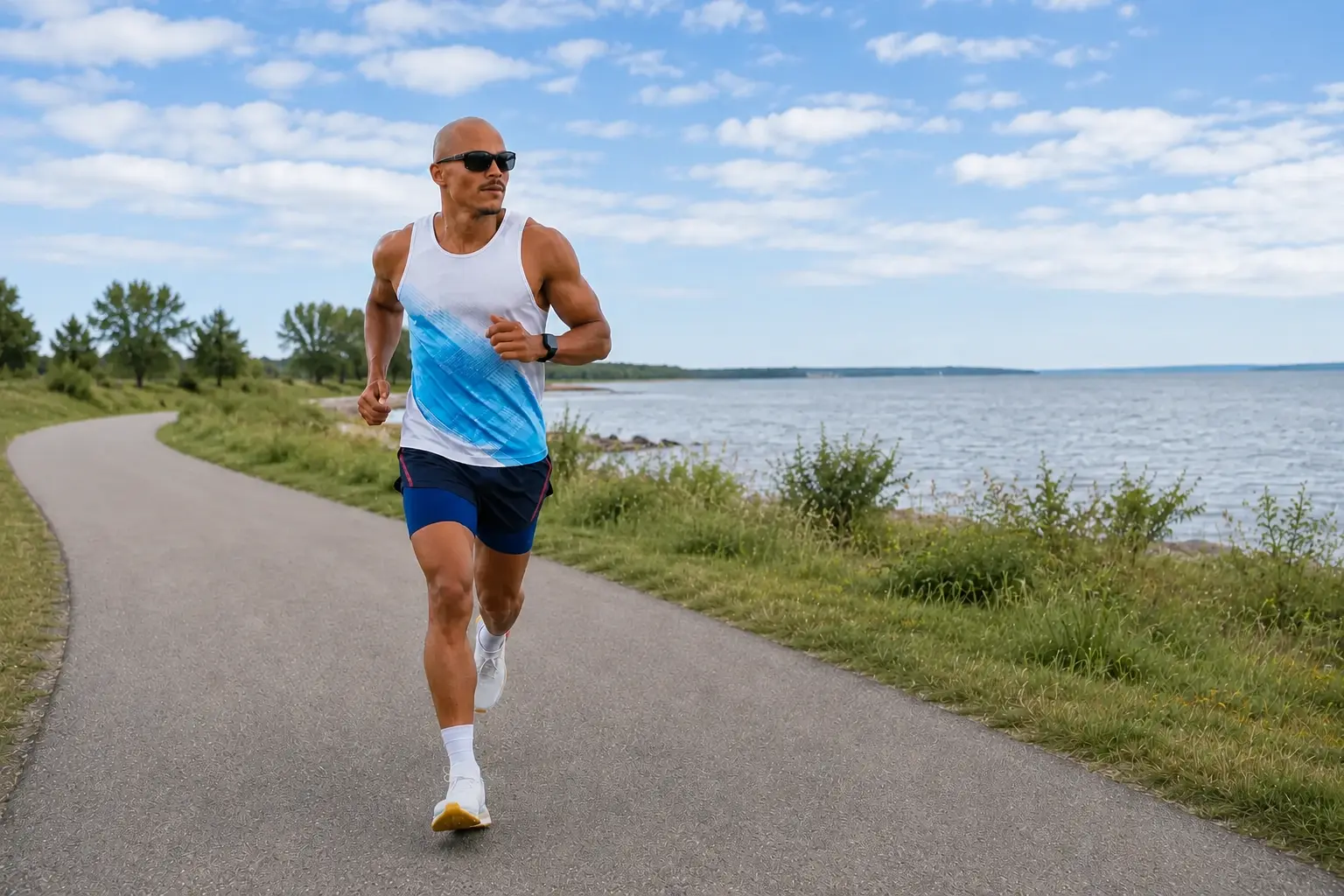
Return to miles
Running is another tendon-loading exercise, so its dose belongs inside the rehabilitation plan.
Some runners can continue a reduced amount of running while rehabilitating; others need a temporary break because daily walking and basic loading remain too painful. The decision is based on the presentation and response, not a blanket rule. Research using a pain-monitoring model found no negative effect from continued tendon-loading activity in selected patients, but that does not make every painful run appropriate.
Reintroduce running at a dose that leaves the next morning predictable. Build comfortable volume before stacking faster work, steep hills, and consecutive hard days. The Achilles must eventually tolerate not only peak force but thousands of repeated contacts and the shorter recovery windows of a real training week.
- 01
Earn an entry dose.
Walking, heel raises, and introductory elastic loading should be stable enough for the first run.
- 02
Monitor the next morning.
Morning stiffness and function help show whether the previous dose was absorbed.
- 03
Build volume, then intensity.
Layer distance, speed, hills, and back-to-back sessions deliberately.
- 04
Keep strength in the week.
Tendon capacity is maintained while running volume returns.
What the plan should give you
The plan should make tomorrow morning—and the next training week—less of a mystery.
Good Achilles care gives you a repeatable loading dose, clear markers to watch, and a plan for what to do if stiffness rises. Hands-on treatment or dry needling earns a supporting role only when it changes a relevant barrier; the durable work still comes from rebuilding force, endurance, elastic response, and running tolerance.
The goal is not merely to complete heel raises in the clinic. It is to finish a run, recover predictably, and return for the next planned session without the tendon controlling the entire week.
Continue exploring
Choose the next question that fits your symptoms.
Part 1: Runner’s knee
See how knee capacity, training exposure, and selected gait changes fit together.
Read nextPart 3: Shin pain
Separate diffuse shin pain from findings that raise concern for bone stress injury.
Read nextAnkle stiffness after a sprain
Learn why pain may resolve before ankle motion, calf force, balance, and rapid control return.
Read nextCommon questions
Practical answers for the next step.
Should I stop running with Achilles tendinopathy?
Not automatically. Some runners can continue a modified dose when daily function and the next-day response remain stable. A highly irritable tendon, painful walking, worsening morning stiffness, or concern for a tear may require more restriction and assessment before running continues.
Are eccentric heel drops the best Achilles exercise?
Eccentric loading can help, but current guidance supports progressive tendon loading rather than one mandatory protocol. Heavy slow resistance, concentric-eccentric work, isometrics, and faster elastic loading can all have roles depending on the stage and goal.
Can I stretch my Achilles?
Stretching may help when ankle dorsiflexion is limited, but more is not always better. Deep dorsiflexion can increase compression at the tendon insertion, so insertional pain often needs a modified range early on.
Can dry needling heal Achilles tendinopathy?
Dry needling is not presented as a way to regenerate the tendon. It may help a selected calf-related pain or movement barrier. The core of rehabilitation remains progressive tendon and calf loading, followed by a criteria-based return to running.
How long does Achilles recovery take?
There is no single timeline. Irritability, symptom duration, tendon location, calf deficits, training goals, recovery, and adherence all matter. Meaningful change is usually tracked over weeks and months through morning symptoms, strength, hopping, running tolerance, and recovery.

Written & clinically reviewed by
Dr. Brandon Lim, PT, DPT, CMTPT, FMSC
Dr. Lim is the founder of Limitless Physiotherapy in Columbia, Maryland. His one-on-one approach integrates detailed examination, movement assessment, manual therapy, dry needling, and progressive exercise according to each person's presentation and goals.
Meet Dr. LimSelected sources
Evidence behind the discussion.
- Chimenti RL, Neville C, Houck J, et al. Midportion Achilles Tendinopathy Revision—2024 Clinical Practice Guideline. JOSPT. 2024.
- Silbernagel KG, Thomeé R, Eriksson BI, Karlsson J. Continued sports activity using a pain-monitoring model during Achilles rehabilitation. American Journal of Sports Medicine. 2007.
- Baxter JR, Corrigan P, Hullfish TJ, et al. Exercise progression to incrementally load the Achilles tendon. Medicine & Science in Sports & Exercise. 2021.
- Maetz R, et al. Exercise-loading protocols versus passive treatment for midportion Achilles tendinopathy: systematic review and meta-analysis. Orthopaedic Journal of Sports Medicine. 2023.
- Pringels L, Capelleman R, Van den Abeele A, et al. Reducing tendon compression in insertional Achilles tendinopathy: a randomized clinical trial. British Journal of Sports Medicine. 2025.
- Kakouris N, Yener N, Fong DTP. A systematic review of running-related musculoskeletal injuries in runners. Journal of Sport and Health Science. 2021.
When pain behind the ankle needs prompt assessment.
Seek prompt medical evaluation after a sudden pop or sharp injury with swelling, bruising, a new loss of push-off, or inability to rise onto the toes. New calf swelling, warmth, redness, chest pain, or shortness of breath requires urgent medical evaluation for a possible blood clot.